
India, known for its diversity and cultural richness, is a land where history breathes through ancient monuments, forts, temples, and palaces. The country’s historical places reflect thousands of years of civilization, conquests, architectural brilliance, and religious evolution. From the northern Himalayas to the southern tip of Tamil Nadu, every corner of India holds a story buried in its historical sites. In this article, we explore the most iconic historical places in India, their legacy, and what makes them timeless attractions for travelers and historians alike.
The Significance of Historical Places in India
Historical places are not just remnants of the past — they are living symbols of India’s heritage. These sites serve as reminders of extraordinary kings, battles, and spiritual movements that shaped the nation. They also represent India’s architectural diversity, spanning Indo-Islamic, Dravidian, Rajputana, and Colonial styles. Visiting these landmarks offers a window into how India evolved through centuries of social, political, and cultural transformation.
Preserving and promoting these historical destinations in India is also crucial for tourism, education, and cultural pride. Millions of travelers worldwide visit these monuments each year, making heritage tourism a vital part of India’s economy.
Top Historical Places in India
1. Taj Mahal, Agra
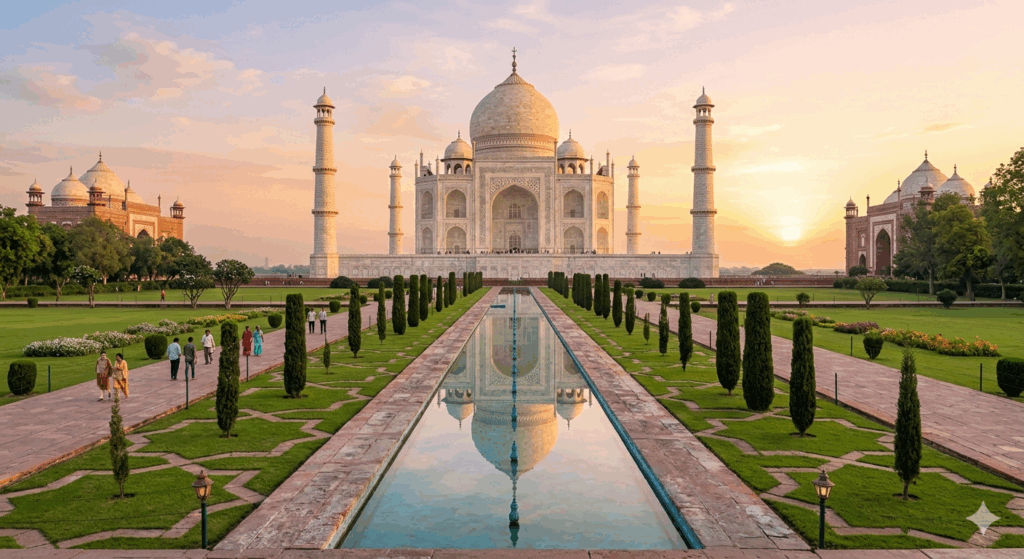
The Taj Mahal, one of the Seven Wonders of the World, stands as a symbol of love built by Mughal Emperor Shah Jahan for his wife Mumtaz Mahal. Completed in 1653, this white marble mausoleum is an architectural masterpiece blending Persian, Islamic, and Indian design elements. Its symmetry, intricate carvings, and reflecting pools make it one of the most visited historic places in India. Located on the banks of the Yamuna River, it’s a UNESCO World Heritage Site and a must-visit for anyone exploring India’s golden history.
2. Red Fort, Delhi
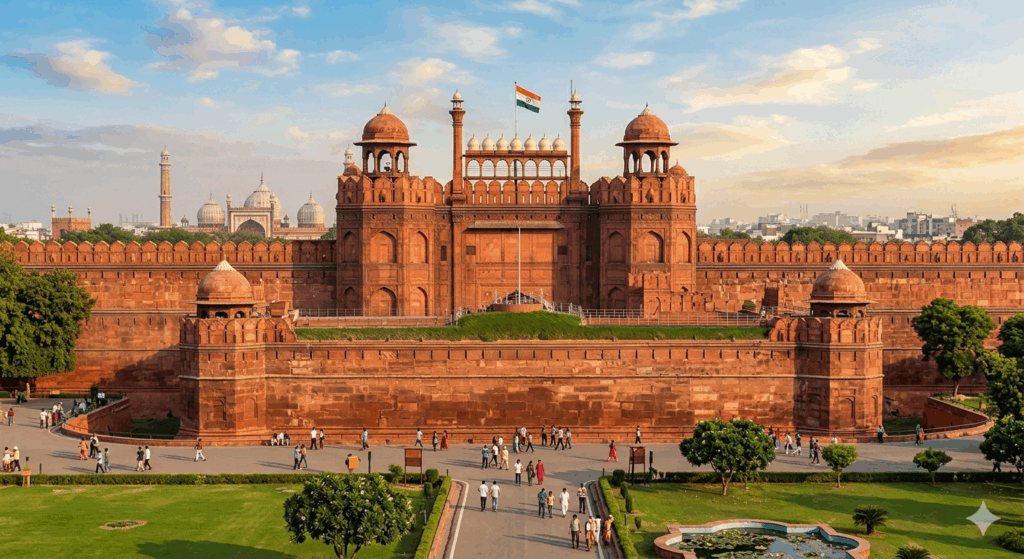
Built by Emperor Shah Jahan in the 17th century, the Red Fort remains a powerful symbol of India’s struggle for independence. Every year, the Prime Minister hoists the national flag here on Independence Day. Made from red sandstone, its formidable walls, Mughal gardens, and grand halls like Diwan-i-Khas and Diwan-i-Aam represent Mughal grandeur at its peak. The Red Fort is one of the most iconic historical monuments in India.
3. Qutub Minar, Delhi
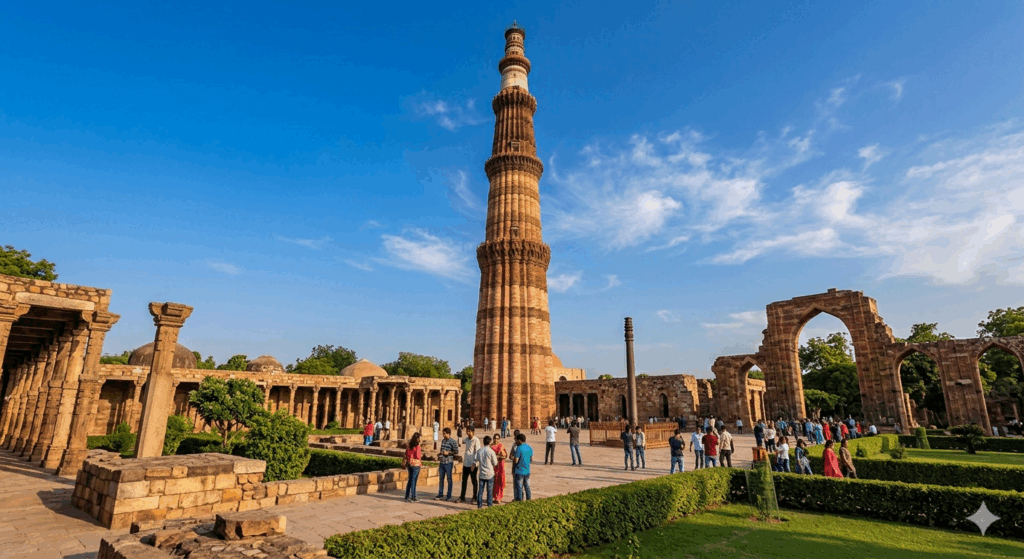
The Qutub Minar in Delhi, built by Qutb-ud-din Aibak and completed by Iltutmish, is a 73-meter-high tower made of red sandstone. It marks the beginning of Muslim rule in India and showcases early Mughal architecture with Indo-Islamic artistry. The surrounding Qutub Complex includes ruins of ancient mosques and the Iron Pillar, which has withstood rust for over 1,600 years.
4. Hampi, Karnataka
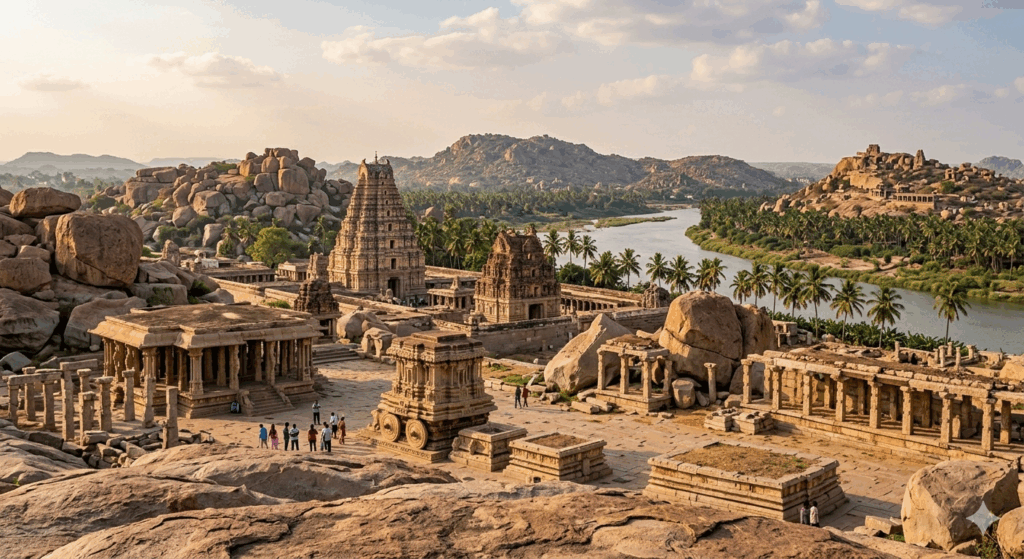
The ruins of Hampi, once the capital of the Vijayanagara Empire, are spread across 4,000 hectares of boulder-strewn landscape. This UNESCO World Heritage Site is known for its majestic temples, such as the Virupaksha Temple, and grand structures like the Vittala Temple, famed for its musical pillars. Hampi captures the cultural zenith of southern India during the 14th to 16th centuries, making it one of the most notable historical places in South India.
5. Ajanta and Ellora Caves, Maharashtra
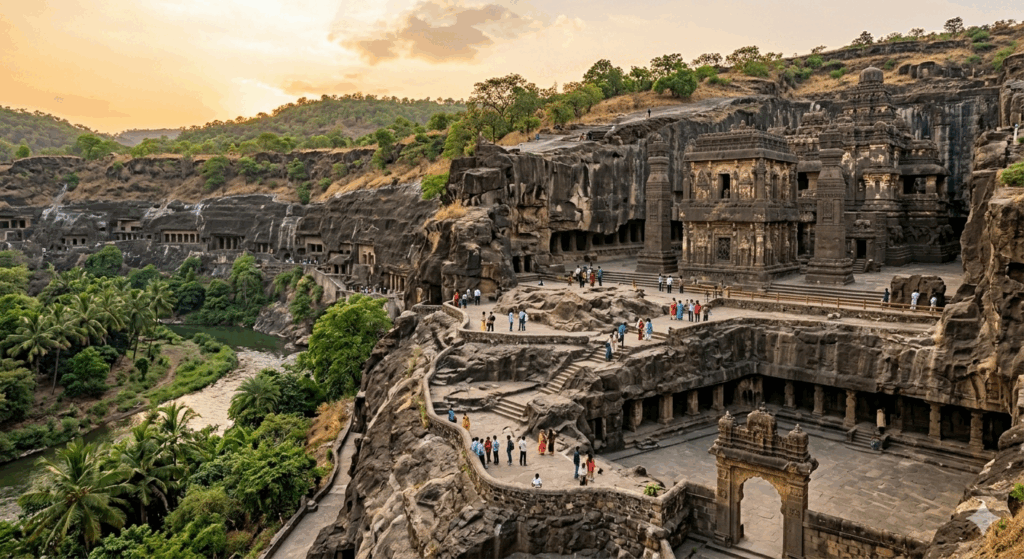
These rock-cut caves near Aurangabad are masterpieces of ancient Indian art and sculpture. The Ajanta Caves, dating back to the 2nd century BCE, depict Buddhist religious themes through detailed murals and carvings. Ellora Caves, on the other hand, showcase harmony among Hinduism, Buddhism, and Jainism, with the Kailasa Temple being the most remarkable example of monolithic rock architecture in the world.
6. Fatehpur Sikri, Uttar Pradesh
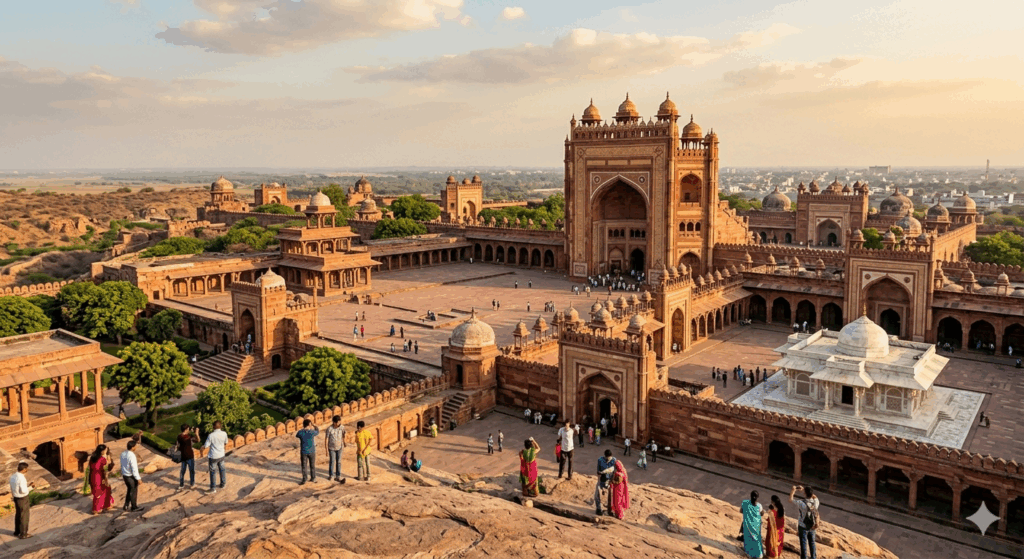
Constructed by Emperor Akbar in the 16th century, Fatehpur Sikri was the Mughal capital for a short period before being abandoned due to water scarcity. This red sandstone city is home to architectural wonders like Buland Darwaza, Jama Masjid, and Panch Mahal. The blend of Mughal and Persian design makes it one of the finest examples of medieval Indian architecture.
7. Khajuraho Temples, Madhya Pradesh
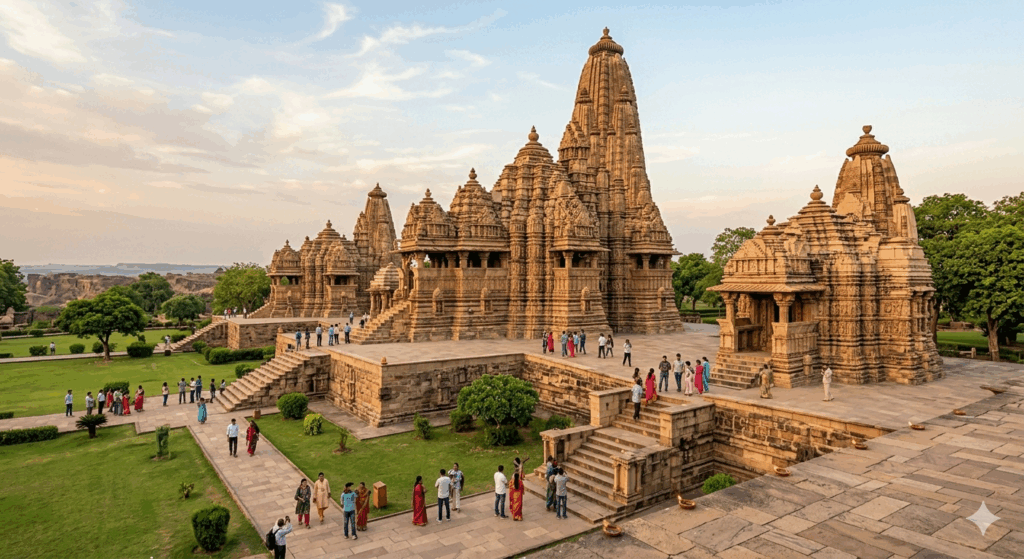
The Khajuraho Group of Monuments, built between 950 and 1050 CE by the Chandela dynasty, are famous for their exquisite erotic sculptures and intricate carvings. Depicting everyday life, divinity, and spirituality, these temples are recognized worldwide as a testimony to India’s artistic excellence and open-minded cultural past.
8. Konark Sun Temple, Odisha
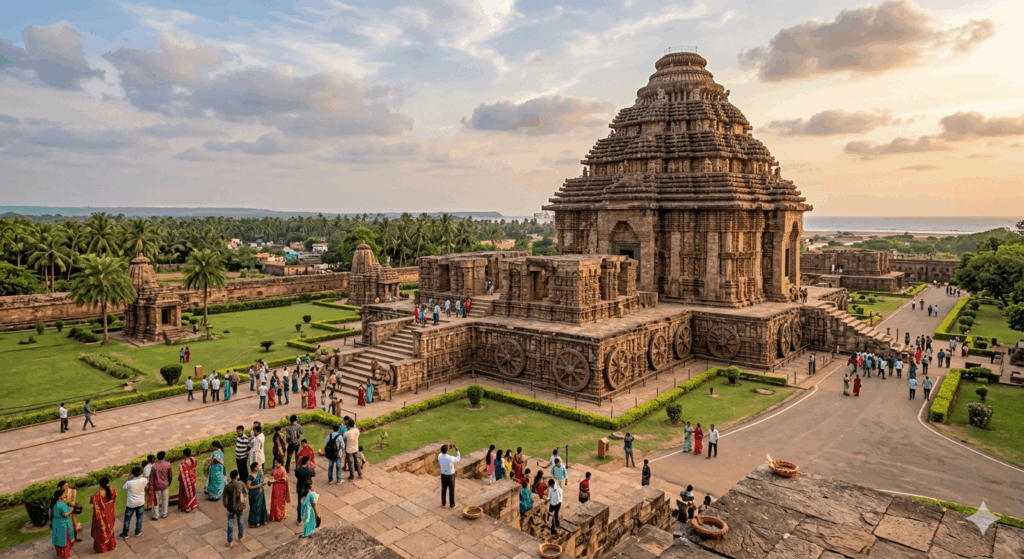
The Sun Temple at Konark, built in the 13th century by King Narasimhadeva I, is designed in the form of a colossal chariot dedicated to Surya, the Sun God. The sanctuary’s twenty-four exquisitely detailed wheels and ornate lithic carvings perfectly capture the architectural brilliance of ancient Odisha’s golden age. It’s also known as the “Black Pagoda” and is part of India’s most revered heritage sites.
9. Mysore Palace, Karnataka
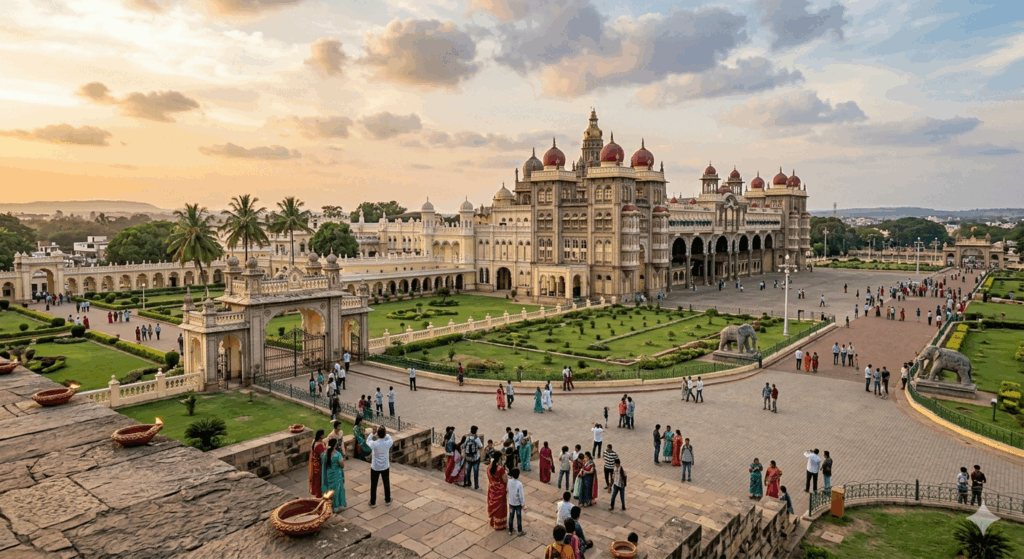
The Amba Vilas Palace, more commonly recognized as the Mysore Palace, stands as a breathtaking pinnacle of the Indo-Saracenic style, harmoniously blending Hindu, Mughal, and Gothic design elements. Once the royal residence of the Wodeyar dynasty, it dazzles with intricate interiors, stained glass, and ornate ceilings. During the Dussehra Festival, the palace illuminates with over 100,000 lights, attracting visitors from all corners of India.
10. Gateway of India, Mumbai
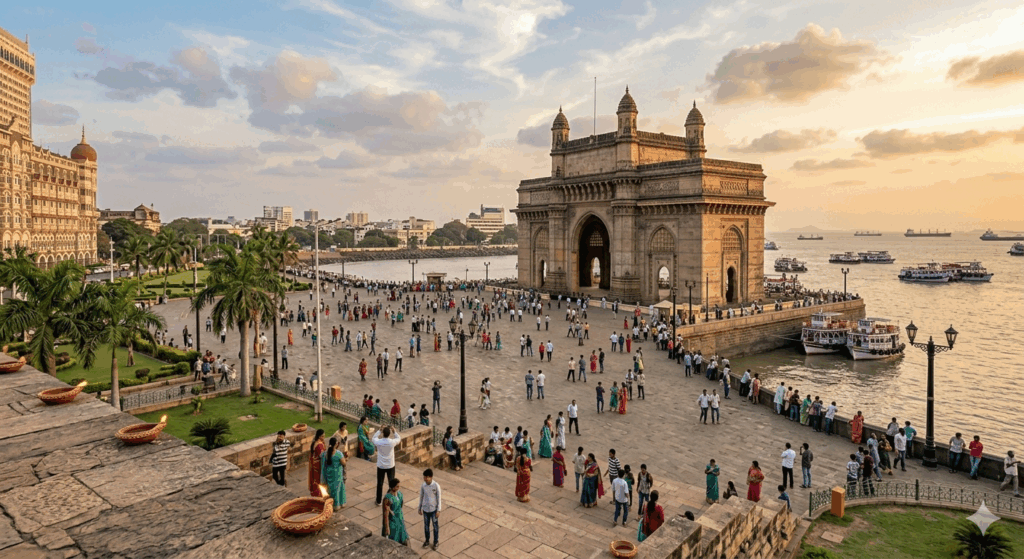
Erected in 1924 to commemorate the visit of King George V and Queen Mary, the Gateway of India became a symbol of both colonial power and independence, marking the departure of British troops in 1948. Standing at the Arabian Sea’s edge, it’s one of the most visited historical landmarks in western India.
Lesser-Known Historical Places in India Worth Visiting
While the Taj Mahal and Red Fort capture global attention, several hidden treasures across India deserve recognition:
- Rani ki Vav, Gujarat – An intricately designed stepwell built by Queen Udayamati, showcasing remarkable craftsmanship.
- Golconda Fort, Telangana – Once famed for its diamond trade, the fort features ingenious acoustic architecture.
- Sanchi Stupa, Madhya Pradesh – Among India’s oldest stone structures, built by Emperor Ashoka to spread Buddhism.
- Mehrangarh Fort, Rajasthan – Towering over Jodhpur, it represents Rajput pride and military strength.
- Chola Temples, Tamil Nadu – Exemplify the zenith of Dravidian art and temple architecture, especially the Brihadeeswarar Temple in Thanjavur.
Importance of Preserving India’s Historical Heritage
Historical places in India are not only tourist attractions — they’re cultural assets that connect generations. Unfortunately, pollution, neglect, and urbanization threaten many of these monuments. Conservation initiatives by the Archaeological Survey of India (ASI) and UNESCO play a crucial role in safeguarding these wonders for future generations. Promoting eco-friendly tourism and spreading awareness about heritage protection ensures these treasures remain intact for decades to come.
Planning a Trip to Historical Places in India
When planning a trip to explore India’s rich past, consider dividing your journey regionally:
- North India: Delhi, Agra, Jaipur, Amritsar, Varanasi
- South India: Hampi, Madurai, Mysore, Thanjavur
- West India: Mumbai, Ahmedabad, Udaipur
- East India: Konark, Kolkata, Gaya
- Central India: Gwalior, Khajuraho, Sanchi
Visiting these regions offers a balanced perspective on India’s political, spiritual, and artistic development through different eras.
Conclusion
India’s historical places are powerful storytellers — they narrate tales of valiant kings, spiritual enlightenment, architectural brilliance, and cultural fusion. Each monument reveals a unique facet of India’s long and vibrant history. Whether it’s the grandeur of the Taj Mahal, the serenity of Sanchi Stupa, or the artistic magnificence of Hampi, every site carries the essence of a civilization that continues to inspire the world.
Exploring these historical places in India is not just a journey through stone and structure but an exploration of the Indian soul — eternal, diverse, and timeless.